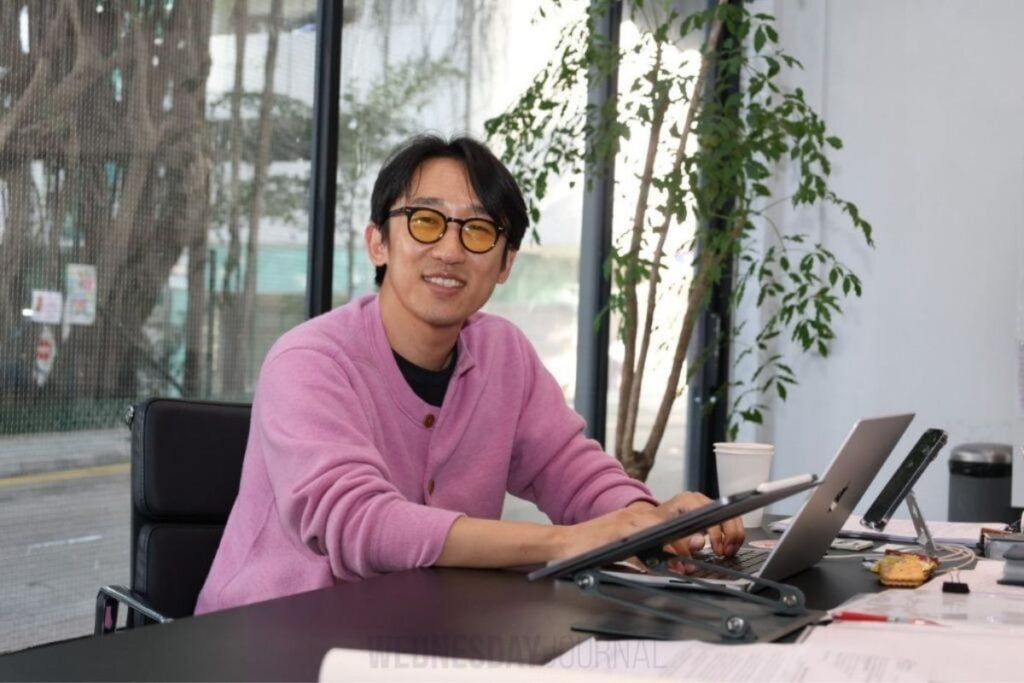
Heading Gold Moon Restaurant Group, Mujung Kang is the figure behind today’s most familiar Korean restaurants in Hong Kong
Plugged-in Hong Kong diners know what comprises a Black Sheep restaurant: spectacle, polished service, and experiential dining. A Pirata Group restaurant has a familiar and family-friendly reputation. The dining clan making up JIA Group is sophisticated and fine-dining-forward.
Numbering 10 Korean brands in 27 locations, Gold Moon Restaurant Group hasn’t exactly operated within the shadows, although they are not particularly a name brand. Yet they have become one of the largest, if not the largest, mover in Hong Kong’s ballooning Korean dining space.
Under their belt they power local adoration for Korean barbecued meats with over 10 locations of Jeonpo Meat Shop and operate noodle-speciality chain Seoul Noodles in eight neighbourhoods. They serve Busan specialities at Busan Night, charcoal-grilled pork ribs at Chorang Garden, and galbitang- and samgyetang-specialitists at Gold Star.
Elsewhere, they dish out Italian food at Pecorino, Korean-infused baked goods at new Mason Pocket, katsu meals at recently opened Katsu by Tonari, casual Korean dishes at Antidote, and coffee at Kaktus Coffee.
Simply put, Gold Moon has capitalised on the roaring culinary Hallyu wave erupting in Hong Kong and around the globe.
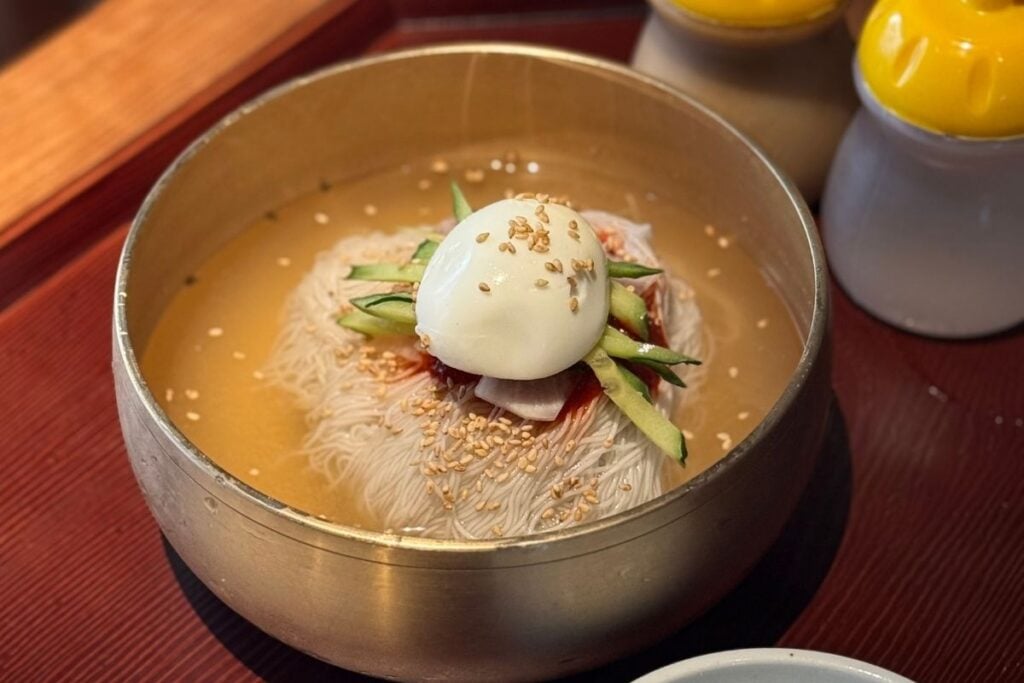
With diners demanding Korean flavours beyond the typical fare one might expect – banchan, Korean chicken, tteokbokki, and kimchi – the restaurant group has taken risks to open restaurants primed for the trends of today. All of this has happened in just over six years.
Co-founder of Gold Moon Restaurant Group Mujung Kang arrived in Hong Kong as an architect in 2015. Four years later, he accidentally fell into the hospitality business.
“I was opening the [former] Kactus Hotel in Sham Shui Po in 2019, and we needed to fill the empty space on the ground floor to complete the project,” Mujung tells Foodie in a call.
“In 2019, people were not travelling due to the protests, so I thought opening a coffee shop would be good business for the hotel.” Kactus Koffee opened in a pre-coffee boom for the neighbourhood and preceded Gold Moon’s eventual formation as a Korean food firm.
“I was working as an architect at the same time as running the café, but I saw more potential for the F&B business,” he explains. “With architecture, it is all about scale; for restaurants, you can design small.”
Yet, during the pandemic, Mujung faced the realities of running a dining establishment – notably, battling the high overheads associated with operating a coffee shop. Opening a restaurant, for the food-dabbling architect, was a safe bet to drive profit in the business.
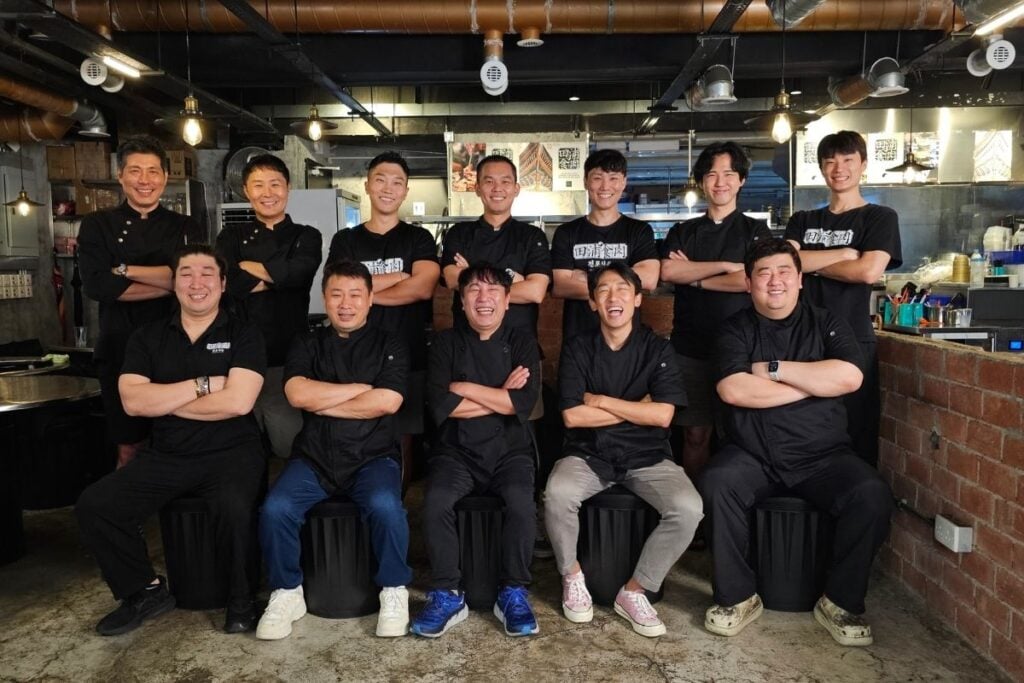
Mujung convinced his partner and Gold Moon co-founder Jung Ho Moon, an expert in the field of Korean barbecue, to immigrate to Hong Kong in the thick of the pandemic to build Gold Moon’s second brand, the ever-present Jeonpo Meat Shop chain.
Drawing on the familiarity of KBBQ, their first location in Tai Kok Tsui drew crowds. The next seven locations opening over five years incurred a reputation for Jeonpo Meat Shop as a leader in the grilled meat space.
At their Central location on Wellington Street, for example, the restaurant cycles through three seatings during lunch, serving a menu of bibimbap, grilled meat and rice dishes, and noodles. At night, an average bill for a table could run up to four figures, with the spectacle of the chefs cutting and grilling the meat tableside on full show.
The growing popularity of Kpop groups, be that BTS, NJZ, SEVENTEEN, or BLACKPINK, and Kdramas in Hong Kong have fuelled a local introspective look into other facets of Korean culture, including food. No longer is Korean barbecue the sole Korean sub-cuisine explored in the city.
Gold Moon’s opening and rapid expansion of Seoul Noodles from March 2024 onwards introduced handcrafted knife-cut Korean noodles to the mix. Busan Night, launched a year earlier, acquainted diners with the seafaring trade of Busan, South Korea’s second-largest city.
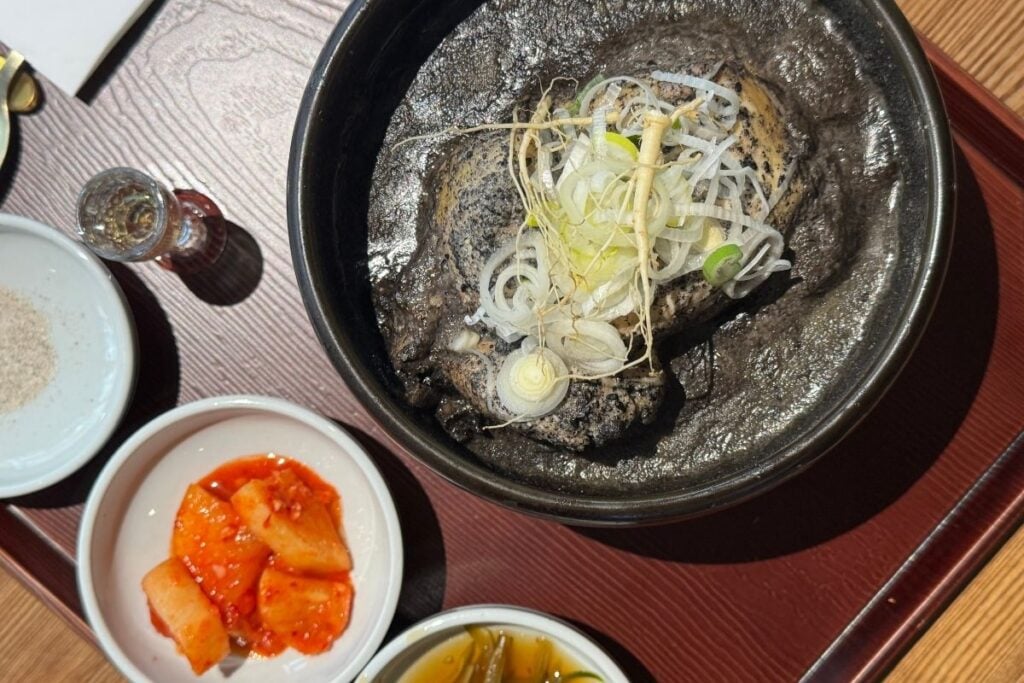
Exploring Korea’s range of flavours is an act of diversification for Mujung, especially in a cut-throat business environment like Hong Kong. “It is a risk to open any restaurant in Hong Kong. Once you sign the contract, you are [subject] to very high rent. Compared to other cities [in Asia], especially Korea, opening up just one restaurant is not enough,” he says.
“People leave the city on the weekend abroad or to Shenzhen because there is nothing new. It is hard to change people’s minds in Hong Kong. Korea’s dining scene is changing and adapting. We want to be like them here.”
Saunter into a Jeonpo Meat Shop or Seoul Noodles location, or dine at one of their newer Korean restaurants such as charcoal-grilled eatery Chorang Garden or noodle shop Gold Star, you may notice that nearly every staff member is Korean. Whilst expensive, employing Korean chefs, service staff, and general managers has made every bit of difference.
“If you go to a Korean restaurant with [authentic Korean food] on the menu, Korean staff, and Korean customers, there is no doubt that their food will be good. You don’t need to be convinced by anything else. This is why we spend a lot of money on visas and accommodation to employ staff from Korea.”
Mujung’s restaurants are also distinctively Korean in look. The seating at their noodle restaurants is boundaryless and oaky, replicating the family-sharing style of dining in South Korea.
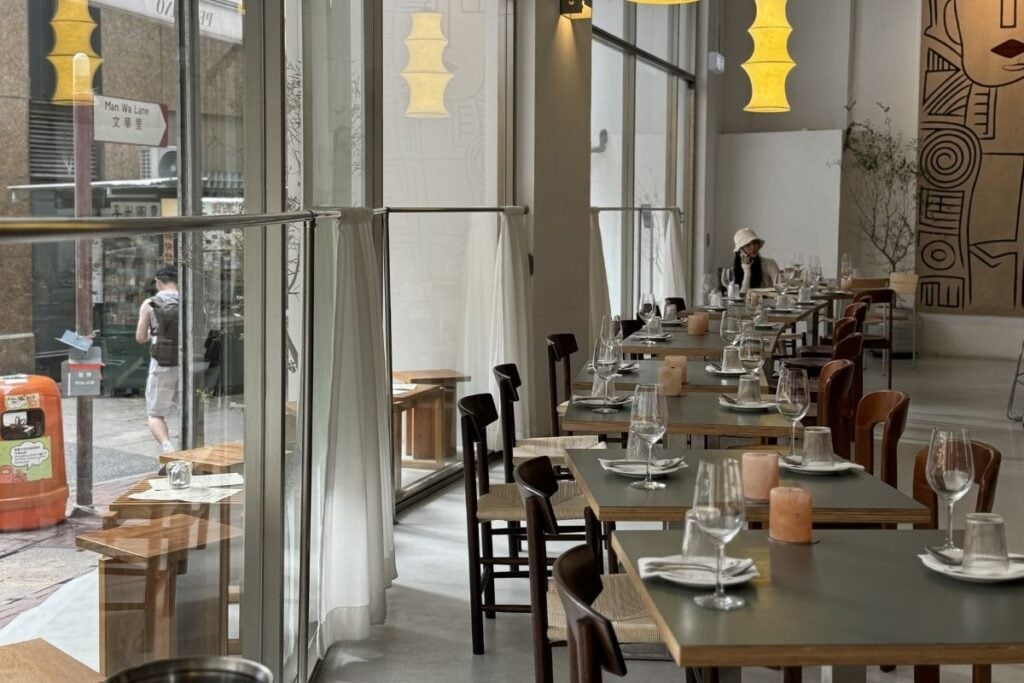
Their BBQ restaurants are dressed in plain tones with limited interior flair, bringing the attention to the plate and grill, yet assuming a sleek Seoul style.
“Many customers say, oh, it looks like they haven’t finished their renovation, when we open a restaurant. We just like to keep the style basic and reduce the budget,” Mujung quips.
Sharing Korean food in Hong Kong doesn’t just mean Korean dishes must be served. With the opening of Pecorino inside the former HSBC Sheung Wan branch location in 2024, Gold Moon strategised a Western restaurant campaign to attract diners to a familiar space.
The Italian restaurant, sizing up as one of the largest food establishments in Sheung Wan’s blue collar area, opened as Netflix’s Culinary Class Wars proved that Korean chefs, design, and ingredients can boost the profile of Western cuisine.
The newly opened Mason Pocket features Korean-inspired brunch plates and Western baked goods. Whilst cognisant to remain centrally Korean in its mission, Gold Moon demonstrates that the cuisine has the potential to affect the way in which diners eat in Hong Kong across the board.
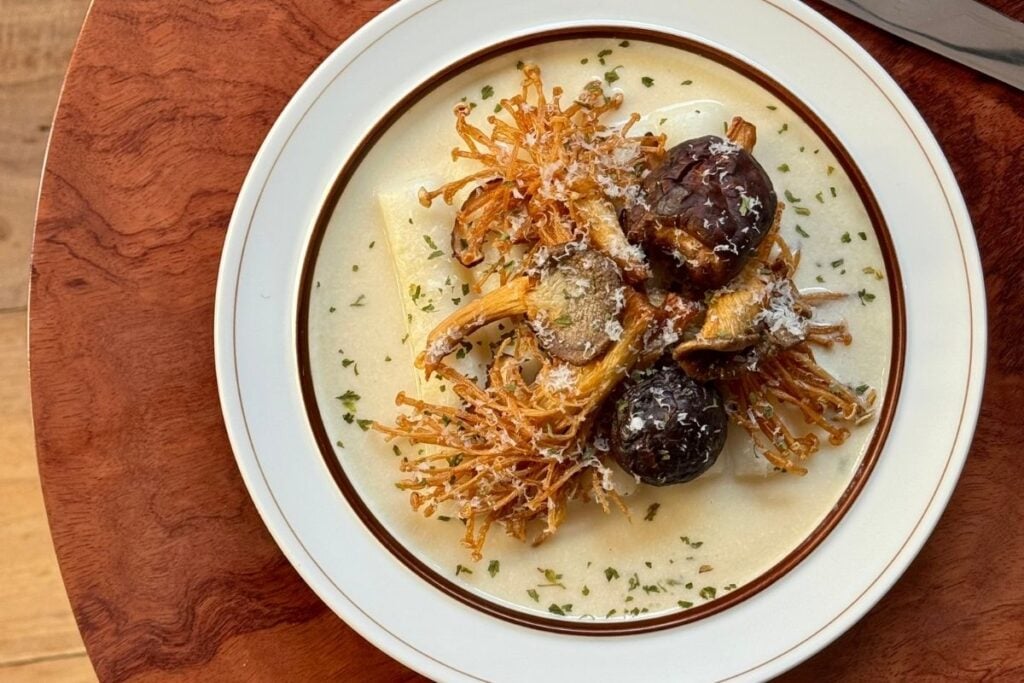
In the bigger picture, Gold Moon and Mujung are seen as trend-chasers, either importing novel Korean concepts to Hong Kong or capitalising on trends bubbling up in the city, hence the need for an Italian restaurant and brunch-focused café in Sheung Wan.
“We have to accept the risks of opening up a lot of restaurants. We just need to try new things and make the trends ourselves.”
Mujung predicts a quiet 2026 following the opening of a number of outlets and brands in Hong Kong last year. He notes the way forward for Korean dining is to laser-in on specialty restaurants, “just noodles, just soup, or just barbecue,” for example.
And the formula has worked, not only locally but across Asia and the world as a whole. Gold Moon now operates multiple branches of Jeonpo Meat Shop and Seoul Noodles in Singapore, along with six Korean-adjacent F&B outlets. The group inaugurated a new Jeonpo Meat Shop in Saigon at the end of last year too.
Revisit or try a new Gold Moon Restaurant Group venue today for a slice of Korea.